November 10, 2026
How Do You Use AI to Qualify Inbound Leads?
Let’s be honest: most inbound qualification is a form field and a gut call. Someone fills out a form looking for information, a marketing rep skims the company name, and the lead goes into a queue that may or may not get worked this week.
AI can do better than that, but only if you set it up to do the right job. Our AI revenue agents are qualifying over 5,000 leads per month, and we’ve had a lot of conversations with our customers as we’ve iteratively refined that process. Here’s what we’ve learned about how AI qualification should work.
MQL vs SQL
Every growing company has had this fight. Marketing hands over a batch of marketing-qualified leads. Sales calls a few, decides they aren’t real, and stops calling the rest. Marketing says sales isn’t following up. Sales says marketing is sending junk. Both have a point.
The argument usually isn’t about effort. It’s about evidence. An MQL is typically built on activity: a form fill, a webinar signup, a whitepaper download, a lead score that crossed a number. A sales-qualified lead needs something different: a real person, with real authority, and a real reason to buy now. Points for downloading a PDF don’t tell a seller any of that.
AI can’t end the argument, but it can change what the argument is about. When every lead is researched deeply, every score comes with a reason, and the definition of a good lead is written down in words both teams agreed on, the debate moves from “these leads are junk” to “should we change how we describe what counts as Hot?” That’s a much more productive conversation.
1. Research first, score second
A lead with nothing but a name and an email can’t be qualified. It can only be guessed at.
So research runs before anything gets scored. YouEx.ai reads the lead’s company website and the open web, and checks LinkedIn, YouTube, X, Medium and Substack, then writes a research report with sources.
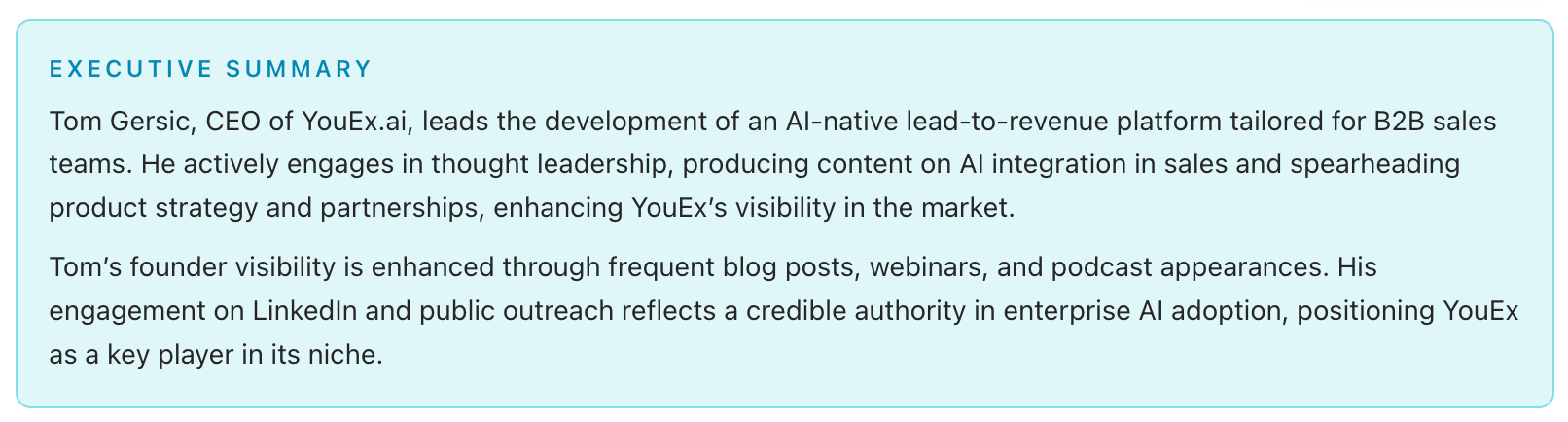
That research does three jobs. It’s evidence the model reads when it judges intent, and it’s the largest single input to the final score. It also arms the seller with the information they need to have a great first call without having to do the research themselves. A lead you know a lot about is a lead you can qualify with confidence.
2. Separate intent from fit
The most common mistake in lead scoring is blending “who they are” and “what they want” into one number too early.
We keep them apart. The intent score is the model’s reading of what the buyer actually said and did: their messages, the research report, and any seller notes. It’s the part that knows a pricing question from a hello. Then a separate tier score blends intent with research depth, conversation activity, fit (title, company, inbound source) and data quality.
The gap between the two is real. In our data, many leads scored 70 or higher on intent and still landed in Cold, because the rest of the picture was thin. Someone can sound eager in chat and still be a student, a competitor, or a company that will never buy. Intent alone doesn’t qualify a lead.
3. Treat executives as their own category
A founder asking a question on your website is a different conversation from an analyst asking the same question. They have the ability to make a quick buying decision.
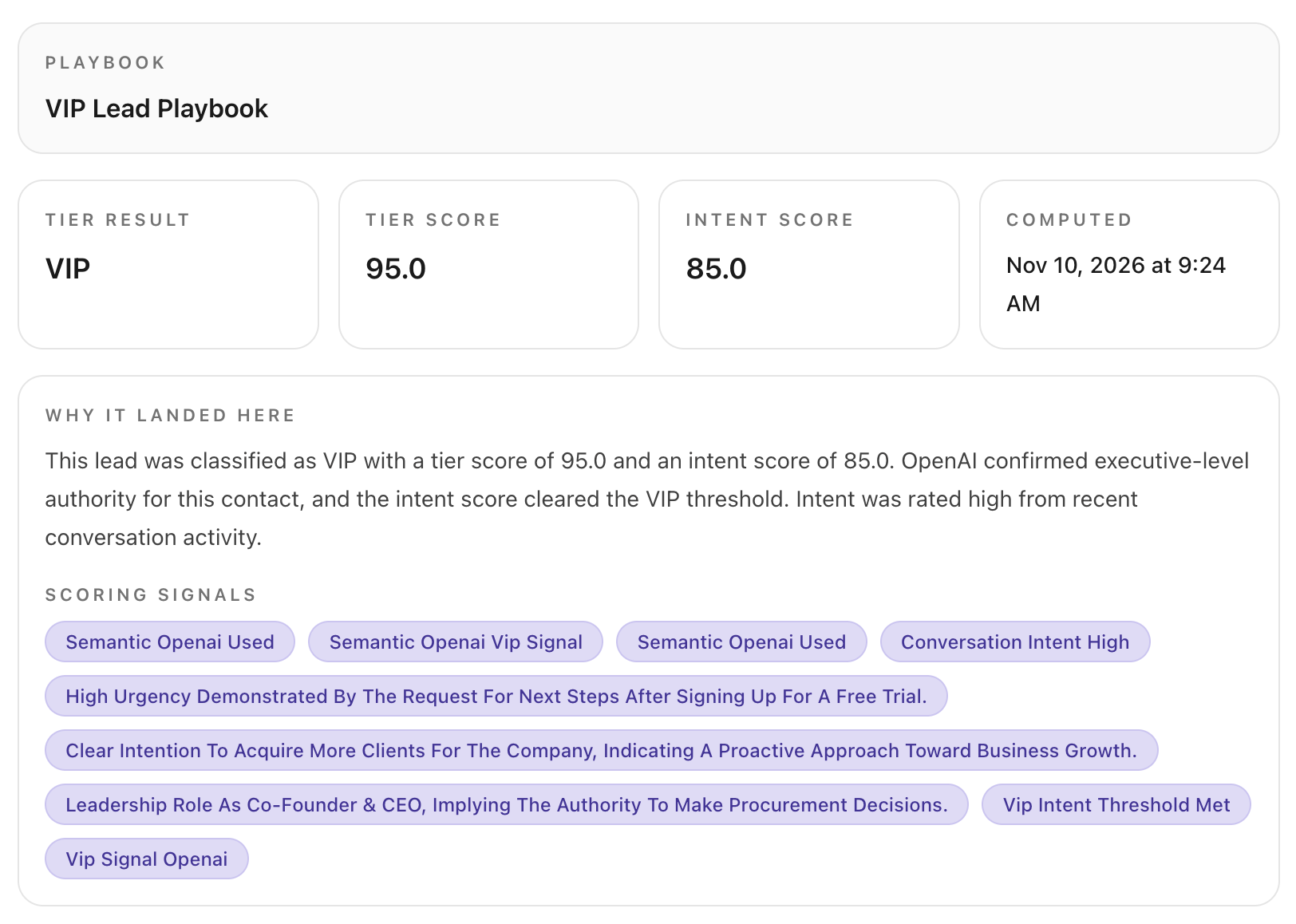
So VIP is a separate judgment. First, the model decides whether the person has corroborated executive authority: C-suite, founder, VP, managing director, owner, or the equivalent, with enough confidence to back it up. Only then does it score their buying intent against the VIP criteria: urgency, timeline, budget and a concrete next step.
Of 1,429 VIP leads, 1,372 were confirmed exactly that way. Another 523 leads were recognized as executives but placed in a lower tier, because their overall score didn’t clear the VIP bar. A title gets you considered. It doesn’t get you to the front of the line.
4. Define your tiers in plain English
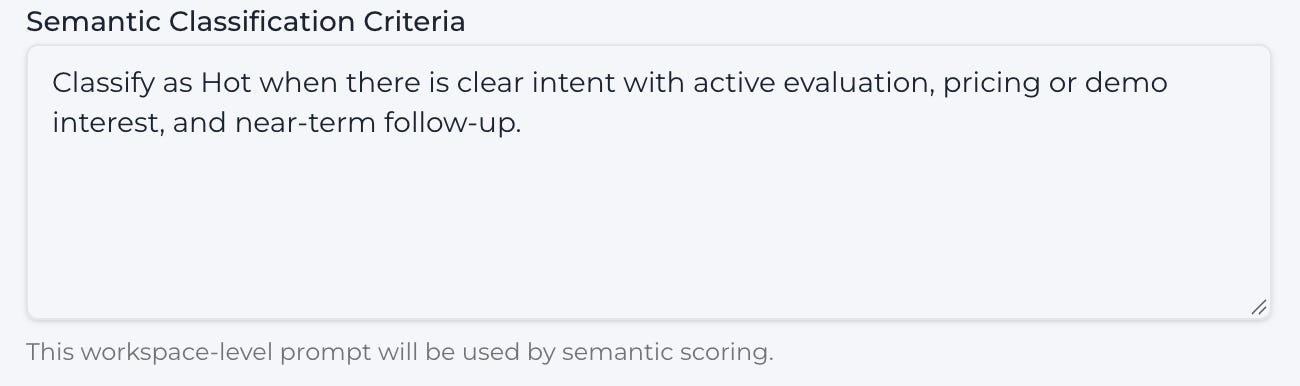
Every YouEx.ai workspace has four playbooks: VIP, Hot, Warm and Cold. Each one has a plain-language definition the model reads, plus a score threshold:
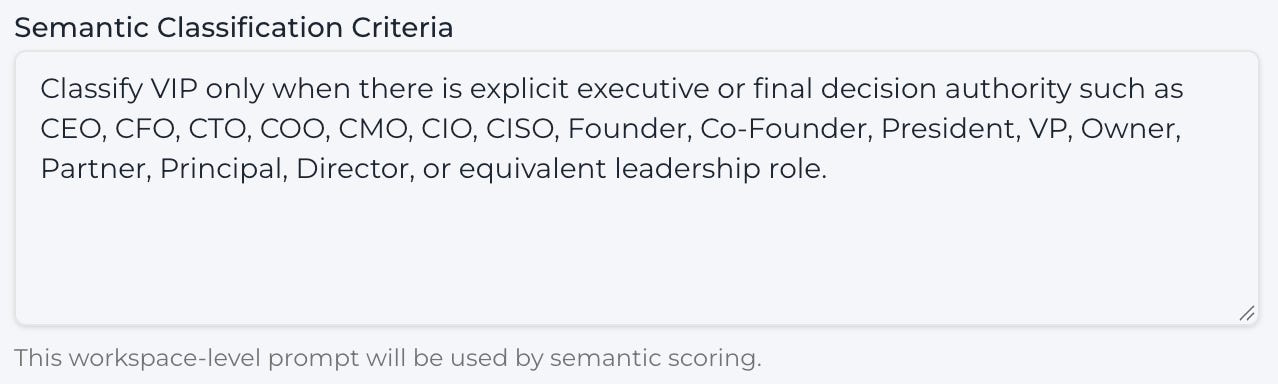
VIP: explicit executive or final-decision authority.
Hot: clear intent, active evaluation, pricing or demo interest, and a near-term next step.
Warm: real interest, but no urgent buying signal yet.
Cold: exploratory, or no concrete buying signal.
Because the definitions are written in words, not rules, you can change what “Hot” means for your business without touching a scoring formula. It also makes them something marketing and sales can write together, so the handoff is built on a definition both teams signed off on.
5. Explain every score
A score nobody trusts is a score nobody uses. On every lead, the Routing tab shows the tier, the tier score, the intent score and when it was calculated, followed by a short explanation of why the lead landed where it did. A typical VIP explanation says the model confirmed executive authority and the score cleared the VIP threshold. It also lists the buying signals it found, like a pricing question, a demo request, a timeline or a procurement step.
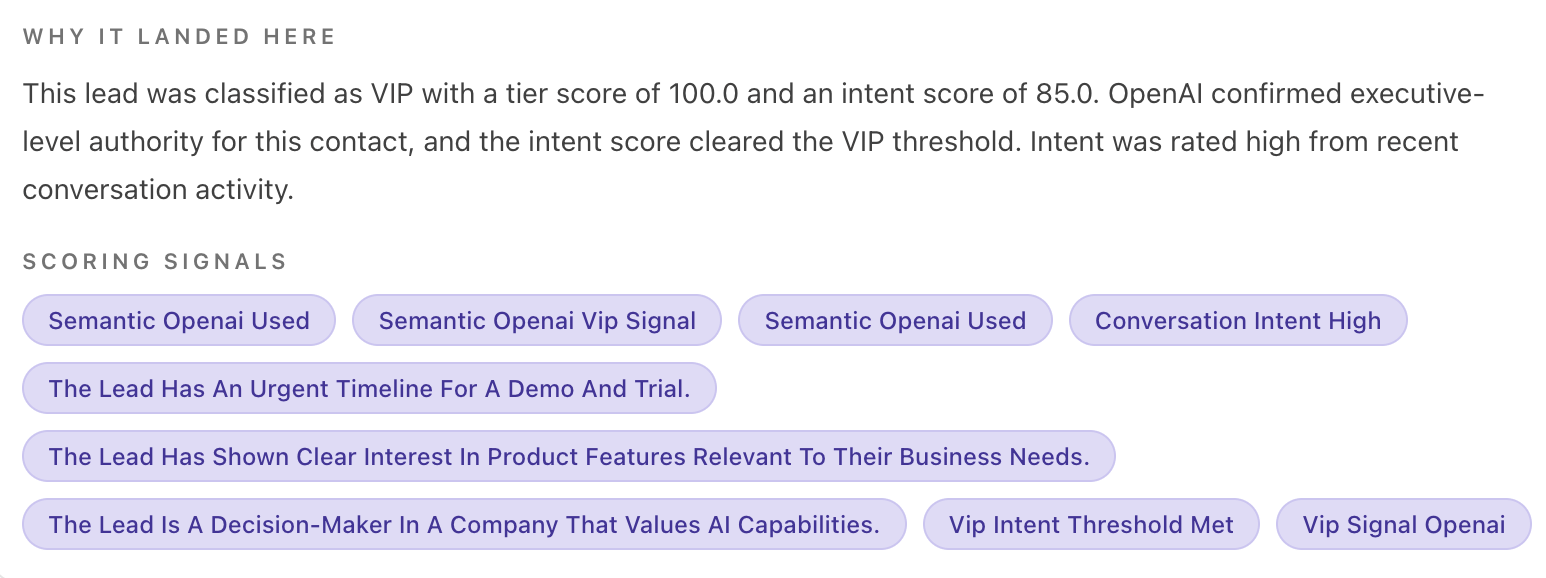
This is what settles most MQL vs SQL disputes. When a seller disagrees with a tier, they can see exactly why the lead landed there, and either make the call or change the definition.
6. Match the follow-up to the tier
Qualifying a lead is only useful if it changes what happens next. So each playbook doesn’t just define a tier. It also decides where the lead goes and what it’s for.
Every tier names a pool to land in and a goal: book a meeting, share resources, or draft an email response. From there, a lead can go two ways:
To a person. Inside the pool, Intelligent Match compares the lead’s research, notes and intent with each rep’s routing profile, and assigns the best fit when it’s confident. If it isn’t, it falls back to round robin, and the lead says so.
To the team. A lead can stay in the pool with a group alert, so whoever’s available picks it up. That’s often the better choice for Warm and Cold leads, where speed matters more than a named owner.
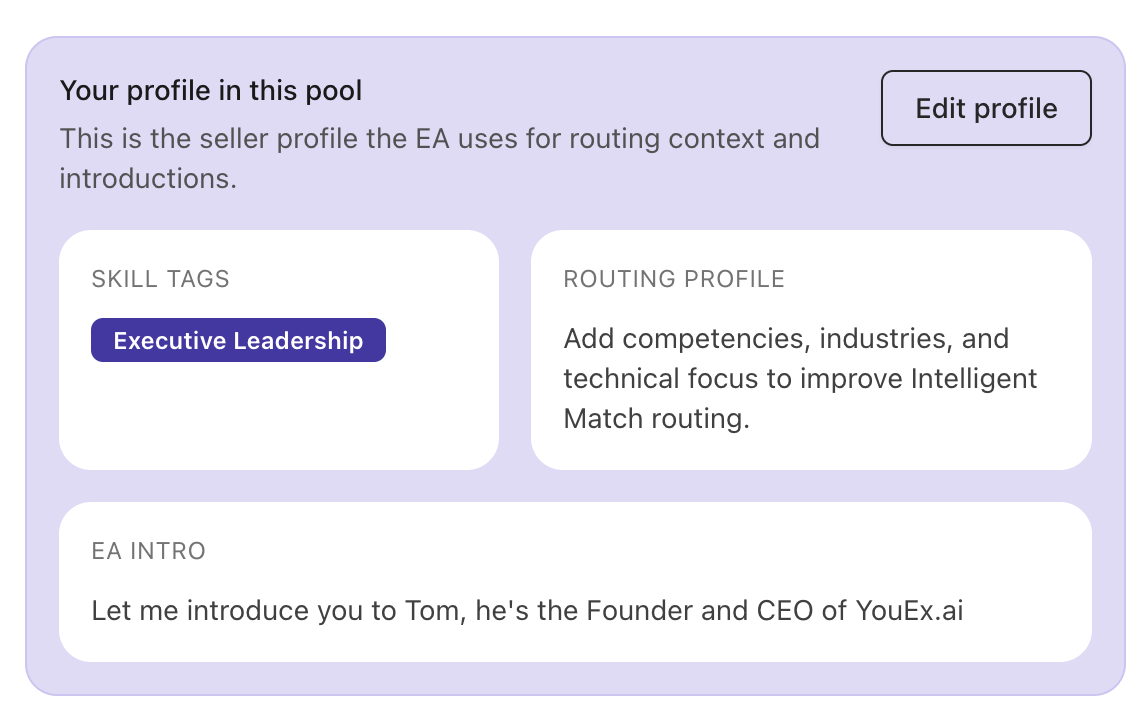
In practice, our customers tend to save named owners for the leads that matter most: most VIP leads are assigned to a specific rep. Warm and Cold leads more often go to a shared pool, where a group alert or a drafted follow-up keeps them moving without filling a rep’s queue.
That’s the real job of qualification. It doesn’t just label leads. It decides how much human attention each one gets.
The short version
If you’re using AI to qualify inbound leads:
Research every lead before you score it.
Score intent separately from fit.
Make executive authority its own category.
Write your tier definitions in plain language, with marketing and sales together.
Show the reasoning behind every score.
Let the tier decide the follow-up: a named rep for VIPs, a shared pool for the rest.
That’s how YouEx.ai qualifies leads, from the first website conversation to the booked meeting. If you’d like to see it on your own inbound, start a 15-day free trial for a pilot or sign up for a live demo at youex.ai.
Frequently asked questions
What does it mean to qualify an inbound lead?
Qualifying a lead means deciding whether someone who reached out is likely to buy, and how much attention they deserve. Traditionally that’s based on form answers and a rep’s judgment. AI qualification adds research on the person and their company, reads what they actually said, and assigns a tier with a written reason.
Can AI replace SDRs for lead qualification?
It shouldn’t. AI is good at the repetitive part: researching every lead, reading every conversation, and sorting leads into tiers within minutes. People are still better at the conversation that follows. The goal is to give sellers better leads and better context, not to remove the seller.
What’s the difference between an MQL and an SQL?
A marketing-qualified lead (MQL) has shown interest, usually through activity like a form fill, download or webinar signup. A sales-qualified lead (SQL) has been judged ready for a sales conversation: a real buyer, with authority and a reason to act. AI qualification helps close the gap by checking for those sales signals on every lead, not just activity.
How accurate is AI lead scoring?
It depends on what the AI has to work with. Scoring a name and an email is guesswork. Scoring after research, with the buyer’s own words to read, is much more reliable. Just as important, every score should come with an explanation a seller can check.
What signals show that an inbound lead is ready to buy?
The strongest signals are questions about pricing, time spent browsing pricing pages on your website, a request for a demo, a stated timeline, mention of budget or procurement, and a concrete next step like booking a meeting. Authority matters too: the same question means more from a founder or VP than from an analyst.
Should a job title alone make a lead high priority?
Not necessarily. A senior title is a reason to look closer, not a reason to skip the queue. In our data, 523 leads were recognized as executives but placed in a lower tier, because nothing else about the lead showed real buying intent.
Do I need a big sales team to use AI lead qualification?
No. It’s often very useful for small teams where the founder is still the best seller and nobody’s full-time job is working inbound. AI does the research and sorting, so the people you have spend their time on the leads that matter.
How long does it take to set up AI lead qualification in YouEx.ai?
The default VIP, Hot, Warm and Cold playbooks work out of the box, and almost every workspace starts with them. Most teams then adjust the plain-language definitions to fit their business. You can try it on your own inbound with a 15-day free trial.